Practical VPN guides
Understand what a subscription buys and how your device’s settings change the connection.
We may earn a commission through offer links. Affiliate disclosure · How we compare
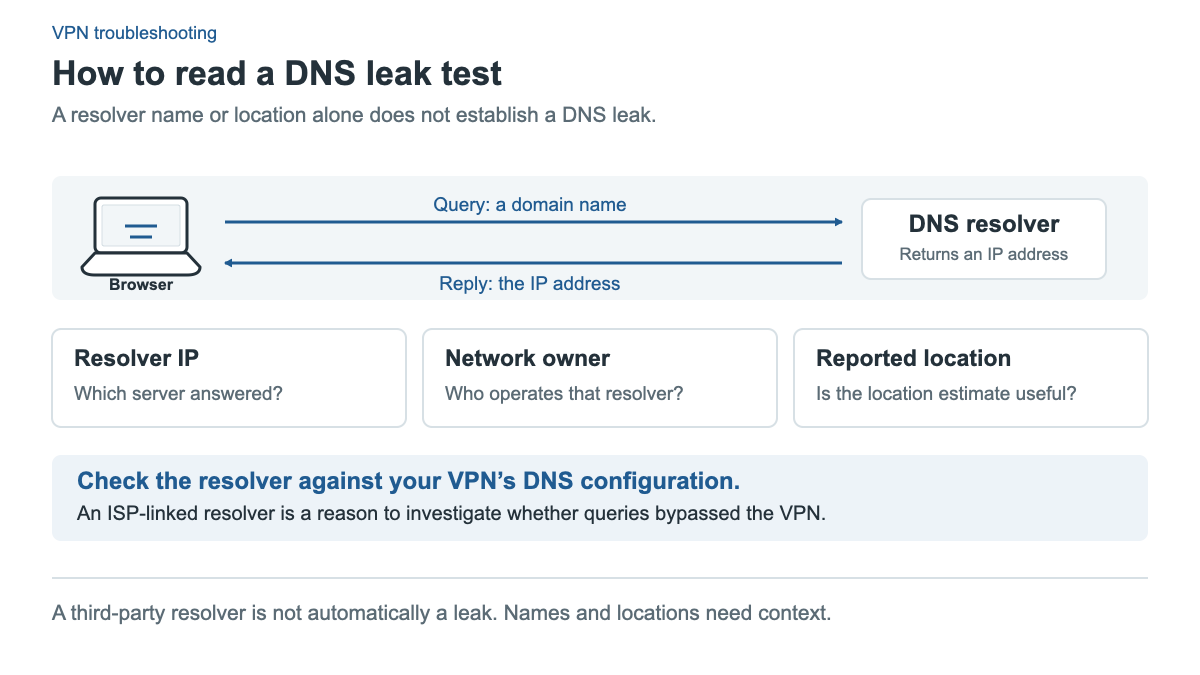
How to run and interpret a DNS leak test
Compare results with the route and resolver you intended to use. An unfamiliar resolver name is a reason to investigate, not automatic proof that every connection is leaking.
Read the guide →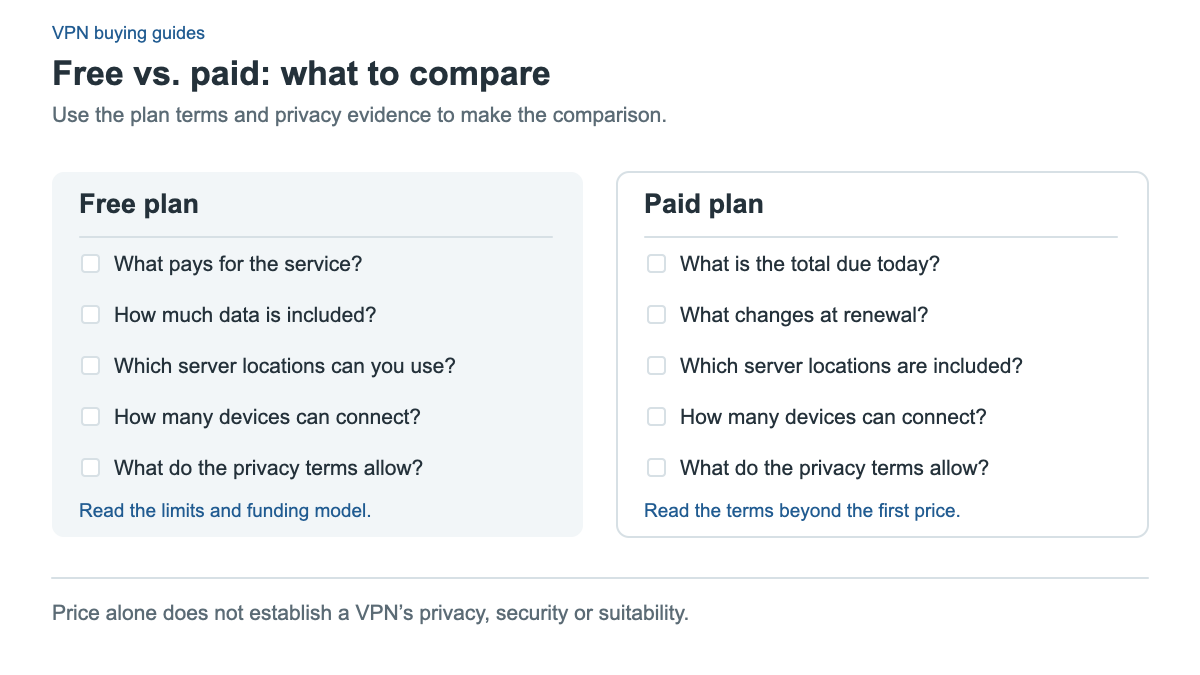
Free vs paid VPN: what are you giving up?
A free plan can fit limited needs, but check its limits and business model. Paying for a VPN does not by itself prove privacy, performance or good value.
Read the guide →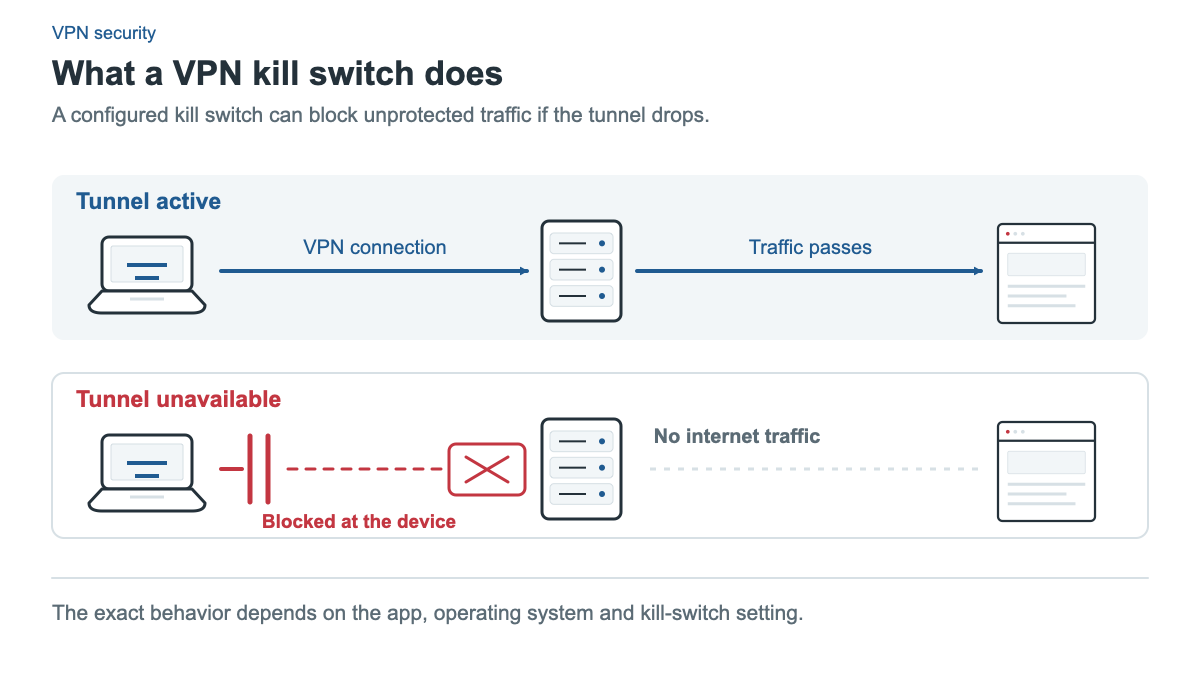
VPN kill switch: what gets blocked, and when?
A kill switch controls connectivity when a VPN is unavailable. Check unexpected drops, manual disconnects and app exit separately; the feature name alone is not enough.
Read the guide →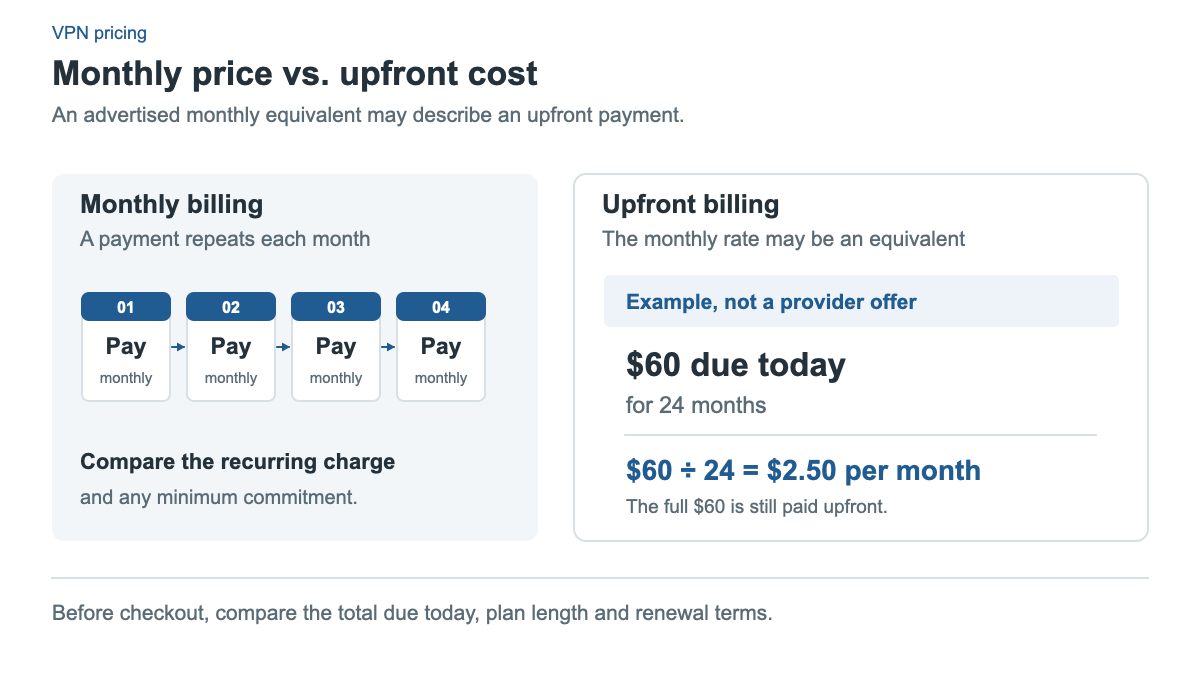
VPN refunds, cancellation and auto-renewal
Stopping the next renewal and seeking a refund of an existing payment are separate actions. Start with the provider’s current terms and your purchase channel.
Read the guide →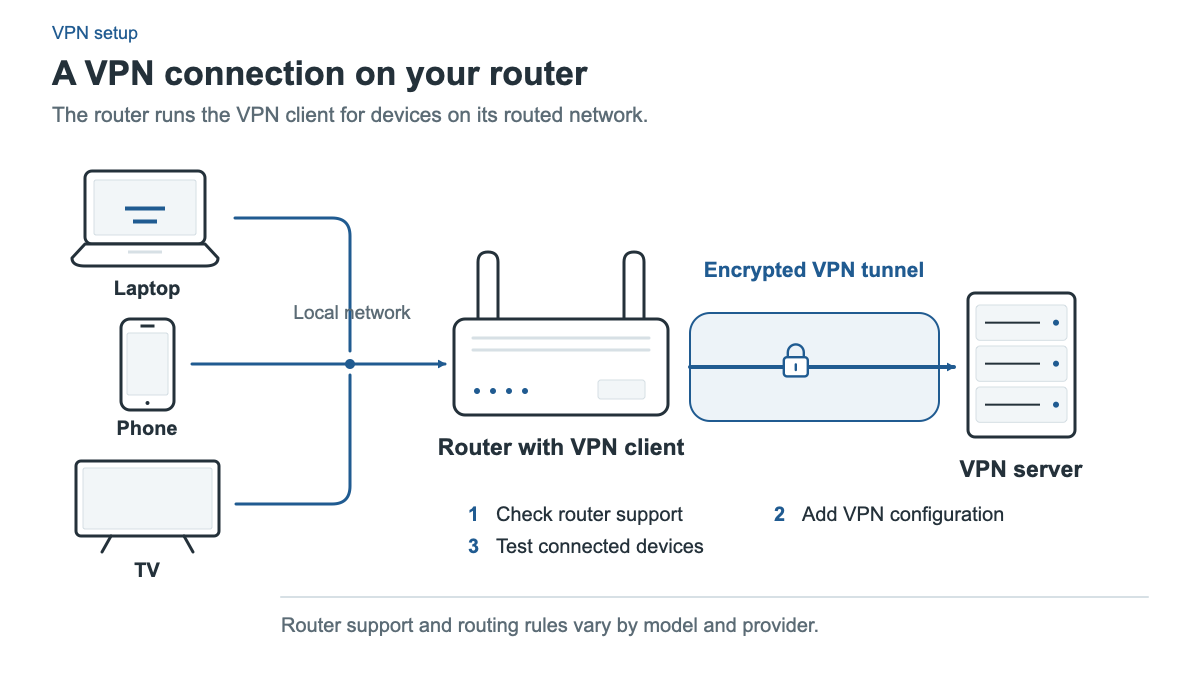
Using a VPN on a router: what to check first
Your router needs a supported VPN client configuration. A VPN-server feature alone does not establish that it can connect to a commercial VPN provider.
Read the guide →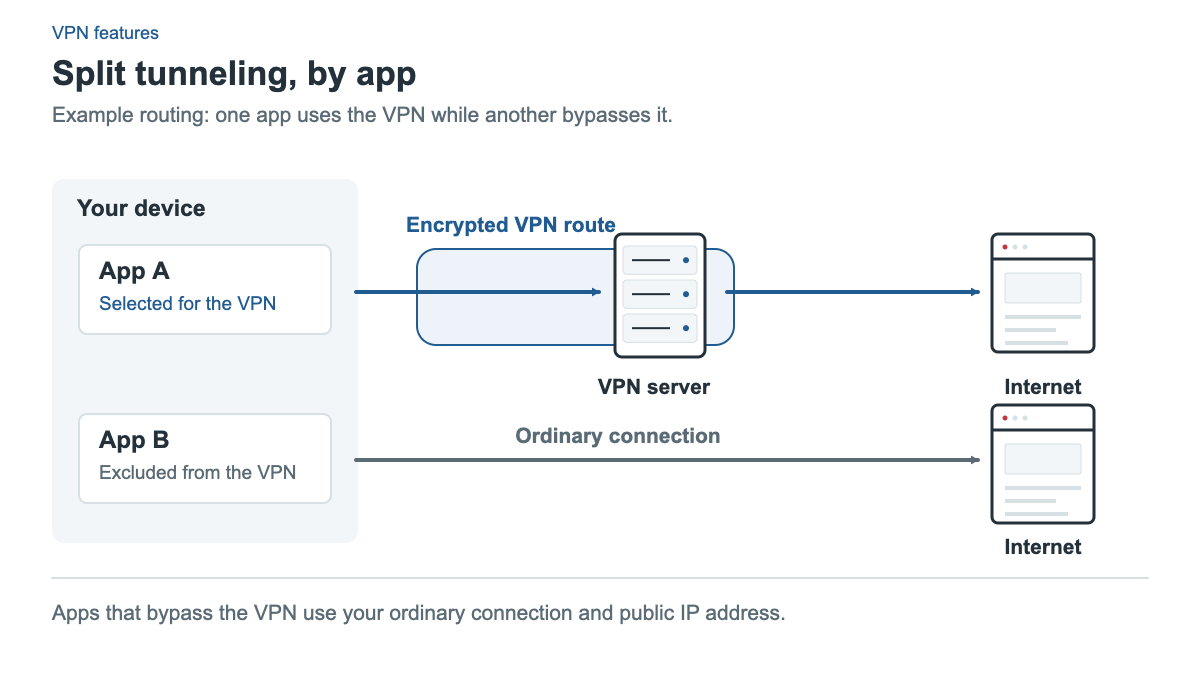
VPN split tunneling: choose which traffic uses the VPN
Split tunneling sends selected traffic through the VPN and other traffic directly. Apps, websites, IP addresses and subnets are different rule types.
Read the guide →How much does a VPN cost?
Start with the full payment and the billing interval. A cheap monthly equivalent may require years of payment upfront and can change sharply at renewal.
Read the guide →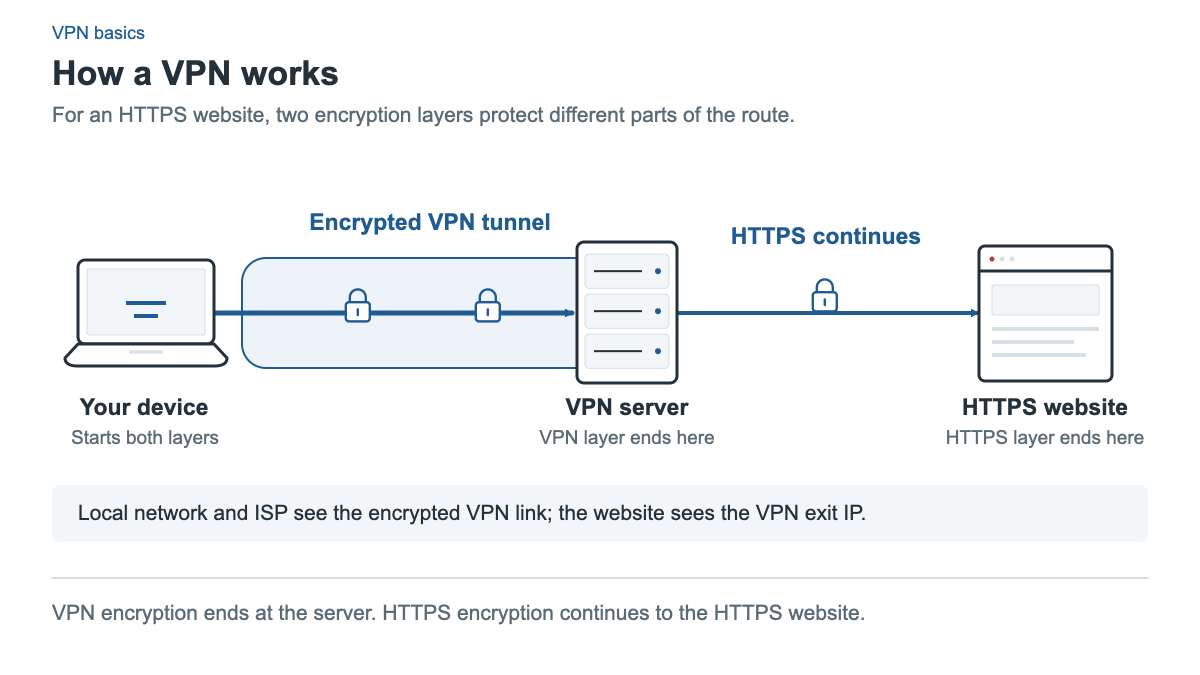
What is a VPN, and do you need one?
A VPN creates an encrypted connection to a VPN server and changes the route of covered traffic. It does not make signed-in browsing anonymous or replace HTTPS.
Read the guide →